Stories

Learnings from Alight’s 2022 Ukraine Emergency Response

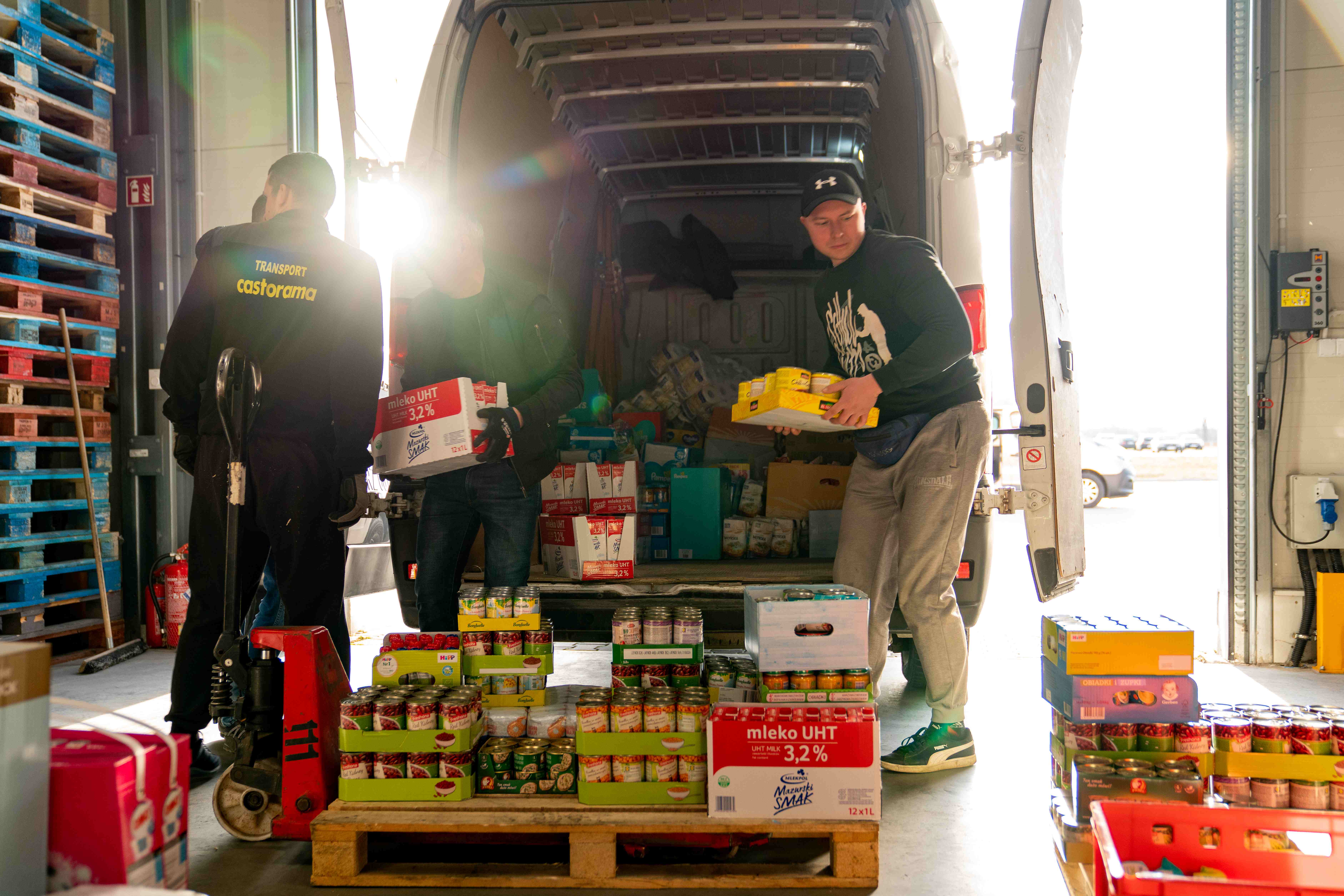
Full scale invasion of Ukraine in 2022 set off Europe’s largest refugee crisis since WWII. Alight was on the ground within the first 48-hours, to meet the needs of displaced Ukrainians at that moment with speed and at scale.
No items found.

In February 2022, Russia’s invasion of Ukraine set off a displacement crisis that, in the months that followed, forced as much as a third of the population to flee their homes. It was Europe’s largest refugee crisis since WWII, and it was happening at staggering speed in areas like Poland where there was no significant existing infrastructure for aid delivery.

Within the first 48-hours, Alight assembled a cross-functional team and orchestrated an on-the-ground response. We leveraged every partnership and resource at our disposal to meet the needs of displaced Ukrainians at that moment with speed and at scale.  

Here is the overview of our key emergency response programs:

Quick Impact Projects (Reach: 526,000)

“Quick Impact Projects (QIPs)” is a unique program name that was created to encompass a range of different activities that all focused on affordable, simple improvements that could be done at scale and primarily executed during the first few months of emergency response.

The majority (~70%) of the 526,000 reach figure for Quick Impact Projects was calculated based on direct service delivery by Alight staff. A smaller percentage was based on providing materials or financial contributions to local organizations.  

CBO Grants (Reach: 544,000)

$3M in grants that was distributed to 200+ Community Based Organizations (CBOs), with the average grant being $10,000.

Funding decisions were based on the specific project submitted for consideration, its intended beneficiaries, budget, and proposed humanitarian outcomes. The projects we supported included civilian evacuation, emergency accommodation, food assistance, medical support, and other forms of humanitarian relief for conflict-affected civilians.

Alight Guides (Reach: 130,000)

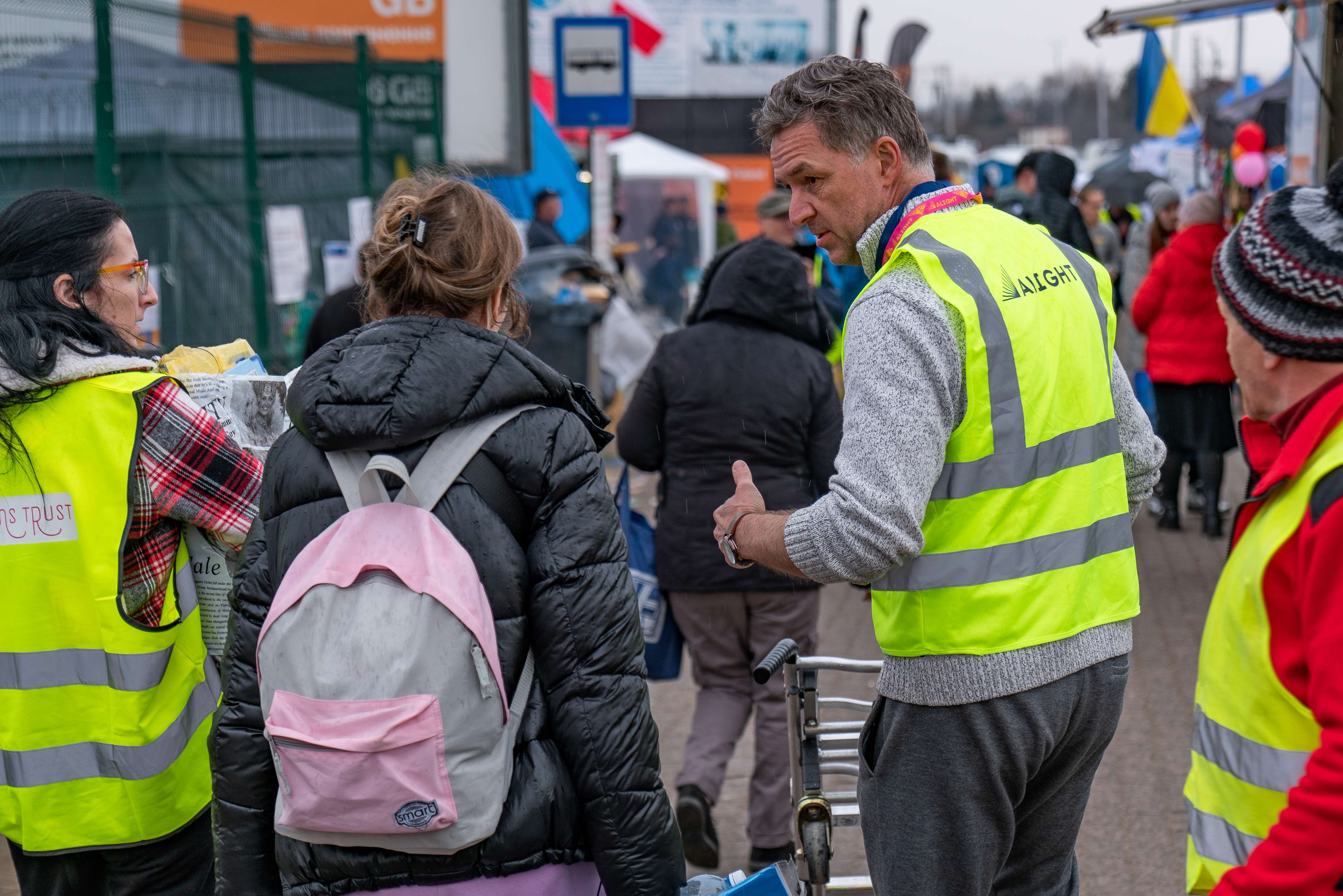
Through years of working with displaced communities, we had learned that one of the most valuable services people need when first displaced is trusted, local guidance. Alight partnered with IDEO.org to develop a program around this insight which led to the launch of Alight Guides in Ukraine. Guides helped people navigate unfamiliar systems in their own language – whether that meant finding a bathroom, accessing healthcare, enrolling children in school, understanding legal processes, or connecting to humanitarian services.

Airbnb.org Housing (Reach: 73,146 nights of housing /~12,000 individuals)

Alight received grant funds and housing credits from Airbnb.org to help secure safe, high-quality housing. More than 73,146 nights of housing were provided.

U4U Uniting for Ukraine (Reach: 3,000)

Alight Guides operating across Poland and Ukraine were trained to provide factual information about the U.S. government’s Uniting for Ukraine (U4U) program alongside other available options. If someone expressed interest, our Guides could help them understand the process, and if requested, support them through it. Alight engaged with more than 3,000 Ukrainians through this effort, and 140 families, ultimately relocated to the U.S.

Unconditional cash transfers (Reach: 150)

Unconditional cash transfers to 150+ people in Ukraine
Calculating reach

The one million figure shared publicly from the first year of the war in Ukraine was an aggregate of people reached through separate lines of work. Because Alight had different programs run by different teams across Poland, Ukraine, and the United States, often delivered through more than 200 local partners, the totals are program-level reach counts and were not deduplicated into a single verified count of unique individuals. It is therefore most accurate to describe the figure as the number of people reached across programs, not as a census of distinct individuals.

We recognize that reach figures were defined and reported differently at different points in the response, and that some program totals may overlap. A fast-moving emergency across multiple countries did not lend itself to the kind of centralized, deduplicated measurement we would apply to a single long-term program.

For example, Quick Impact Projects (QIPs) and Alight’s work with Community Based Organizations (CBOs) are separate but there is potential for overlap in the number of unique individuals reached as some people may have received multiple services from Alight. The 526,000 reach for Quick Impact Projects was primarily focused on the first few months of emergency response and encompasses direct service delivery by Alight staff as well as providing materials or financial contributions to CBOs to cover affordable, simple improvements that could be done at scale. The 544,000 reach is based on $3M in grants that was distributed to 200+ CBOs, with the average grant being $10,000. The timeframe for CBO grants spanned 2022-2024.

Examples of Quick Impact Projects (526,000)

  • (Direct support) In Spring 2022, Alight staff purchased  cots, blankets, cleaning supplies for at least one Tesco supermarket which were converted into major temporary refugee shelters. Tesco had 1,500 beds turning over every 24-48 hours and over 2 months. The reach was 50,000.
  • (Material support) In Spring 2022, Alight purchased over 25 tons of food support, along with hygiene and other non-food items for Lviv City Council which reached 20,000.
  • (Financial support) In Spring 2022, Alight provided a local partner in Kyiv with $4,950 to cover the cost of 500 medical bandages which reached 500.

Examples of 200+ CBO Grants (544,000)

  • (Financial support) In Summer 2022, Alight provided a $10,000 grant to UA BWB for hospitals to procure Smoflipid inside Ukraine. Smoflipid is used for IVs as a calorie substitute when people cannot eat. The reach was 813.
  • (Financial support) In Winter 2023, Alight provided Związek Ukraińców w Polsce Oddział with a grant for $19,300 to provide tea, coffee, water to IDPs outside Ukraine at the train station. The reach was 36,000
  • (Financial support) In Spring 2023, Alight provided a $9,800 grant to KIND INITITIVS MENSHINY to provide generators for a hospital and school in Mena, Ukraine The reach was 26,000.
  • (Financial support) In Summer 2024, PEACEFUL HEAVEN OF KHARKIV received a grant for $43,750 to fund two humanitarian projects – “Repair and arrangement of collective site for IDPs in Kharkiv” and "Providing hygiene kits to IDP families and evacuees from frontline communities in Okhtyrka". The total reach was 200 +2,600.

‍

Page: /

Human-centered emergency programs

For decades, Alight has worked to advance a different, more human-centered approach to humanitarian aid, one that is built on values of dignity, abundance and collaboration.

At the beginning of the war in Ukraine in 2022, Alight partnered with IDEO.org on the development of several different programs which were all made possible because of a donation from a private donor. Alight decided to engage IDEO.org, experts in human-centered design, to ensure that we were helping people beyond mere survival and instead offering high-quality services that provided dignity and safety. Alight’s partnership with IDEO.org began a decade prior to the outbreak of the war in Ukraine. As a long-term partner that had collaborated with Alight across several contexts, they were trusted experts.

As needs and funding have changed since 2022, some of the programs have since ended but below is a brief description for a few:

The Alight Guides program and its key segments:

  • Alight Local Guides – the actual people who worked as on-the-ground connectors at different meeting points (for example at border crossings) guiding customers to all existing services including Alight’s. Alight Guides supported 130,000 new arrivals by providing referrals, directions, psychological first aid, and direct support.
  • Alight City Guides – the mapping of the arrival infrastructure and resources available for displaced Ukrainians in different Polish cities.
  • The Alight Guides website was just one component of the overall program, but it was critical for sharing information and providing credibility.

Alight Havens:

  • Havens was an intensive research project and a blueprint/manual was developed to guide the space design, experiences and services offered to displaced families. The research included customer co-creation, and looking at the best practices in existing shelters for displaced Ukrainians in Poland. Given funding restrictions and uncertainty in 2022 around the timeline of the war, the Alight Board decided not to invest in building its own site, however the blueprint has influenced the design of Alight’s safe spaces and we openly shared the blueprint with other nonprofits who could benefit from the insights and best practices.

Private funding gives us the flexibility to respond to what communities say they need, not only to what grants will fund. It allows us to invest in co-creation, research and development, better program design, and community priorities that are often difficult or impossible to support through restricted institutional funding alone. These investments also carry a responsibility to ensure that resources are used thoughtfully, partnerships are transparent, and decisions remain accountable to the people and communities at the center of our work.  

The breakdown for how Alight’s private donations were allocated for its emergency response efforts in Ukraine is approximately 84.41% was dedicated to program support, 2.75% was dedicated to branding, communications, and the remaining was for other expenses (management and general expenses or fundraising expenses). Spending that supports direct program or service delivery - including research, program design, website development, and communications efforts to reach more displaced customers - is classified under program services. When costs serve multiple purposes, such as a website that delivers information and services to customers and also helps raise general awareness for the organization, we split expenses across categories based on our best estimate of program vs. general benefit.

Local Partnerships

At Alight, we believe the people closest to a problem are also closest to the solution. And we believe our responsibility as a humanitarian organization is not simply to deliver programs, but to listen carefully, learn continuously, and design solutions together.

Since the outbreak of the war in 2022, Alight has supported Ukrainian communities by providing direct support and grant support to 200+ Community Based Organizations (CBOs) in Poland, Ukraine, and beyond. Below is a brief description of some of the humanitarian activities covered by Alight’s grant agreements:

  • Anomaly was provided a grant for purchase and preparation of a bus for the evacuation and transport of people fleeing the war and de-occupied areas.  
  • Gromada V DII - Provided help and support to 600 displaced people by delivering essential food products including buckwheat, oil, sugar, as well as canned meats and vegetables.
  • Hostyna Khata - International Charitable Foundation “Ukrainian Soul” is a charitable foundation that created a volunteer project "Hospitable Hut" in Odesa in order to help internally displaced persons (IDPs) and local people in need.  They were provided a grant agreement that included food and hygiene products for 2000 people as well as financial support for 30 volunteers.  
  • Ukrainian Patriot was provided a grant for the production and delivery of hygiene kits to women, men, and children who live in challenging conditions with no access to power, water, or food in the Eastern Ukraine.
  • Volunteering and Help Center based in Lviv, Ukraine, was provided a grant to cover operational support for a humanitarian warehouse and IDP shelters, including rent, staff, transport and packaging.
  • Zhyva Nadiya was provided a grant for medical equipment, fuel and food for emergency assistance to civilians in southern Ukraine.

Alight had vetting and monitoring procedures in place to ensure that all organizations were using grant funds in a lawful manner and only for the activities set out in the scope of work agreement. There was also an explicit agreement clause stating that the funds could not be used to purchase firearms, weapons or explosives of any kind. In addition to the signed agreements, due diligence was conducted through Bridger checks, banking checks and reporting requirements including retaining receipts and submitting final activity reports. All funding was expressly restricted to civilian and humanitarian purposes.

Impact and learnings

Alight’s response to the war in Ukraine tested nearly fifty years of humanitarian experience against one of the fastest and largest displacement crises since the Second World War, and we learned a great deal from both what worked and what was hard.

Meeting displaced people at the border with food, health, and hygiene items, warm clothing, and information, housing families quickly and with dignity, and channeling funding to local community organizations already trusted in their neighborhoods allowed us to reach people at speed and at a scale we could not have achieved alone.

We learned just as much from the challenges of our Ukraine response. Mounting a rapid, privately funded response across multiple countries and more than 200 local partners, largely through small field teams, meant that our systems for documentation, vetting and measurement did not always keep pace with the speed of the work in the earliest months. We learned:

  • Co-creation is possible in an emergency context - In humanitarian response, especially in emergency, customers are rarely consulted. From Day 1, Alight started by asking people what they wanted and needed. Listening in real time, through Kuja Kuja and through our Alight Guides, most of them displaced themselves, meant our response was shaped by what Ukrainians actually told us they needed rather than by assumptions made far away.  
  • Emergency speed and rigorous process are not opposites – The controls and consistent record keeping we apply to long-term programs need to be built from the very start of an emergency, not layered on afterward.
  • Value of knowing when to stop – Several programs we piloted were discontinued once they had met their purpose or were no longer the right fit. We view this  as a healthy part of responsive programming rather than a failure. For example, the Havens program presented the organization with a decision whether to buy and renovate two buildings to provide temporary housing to families as transitional support. However, we did not do so because funding was uncertain and the housing shortage in Poland at the very beginning of the war evolved 6 months later. ‍
  • To be more disciplined and precise – in how we report reach when a response spans many programs and partners at once.
  • More consistency required for internal and external language – Ensuring how we talk about Alight’s work reflects the clarity we bring to our mission. As an example, “Quick Impact Projects (QIPs)” is a unique program name that was created to encompass a range of different activities that all focused on affordable, simple improvements that could be done at scale and primarily executed during the first few months of emergency response. Alight did not create a unique program name to describe the $3M in grants distributed to CBOs. Therefore, it’s possible that some staff broadly applied the term “QIP” to talk about any of Alight’s work with local organizations.

Perhaps the most important lesson was the one we have been sitting with as an organization: how to make sure the business of running a humanitarian response – the fundraising, the systems, the partnerships – always serves our proximity to the people we exist for and never overshadows it. That question has reshaped how we work, toward customer accountability, local leadership and decision-making that stays close to the ground.

The lessons from Ukraine now travel with us into our work in Sudan, Rwanda, and beyond, and they continue to sharpen a simple commitment: to treat displaced people as customers with agency and dignity, to stay honest about what is and isn’t working, and to keep getting better at the work.

—

Tags

No items found.

Stay in the loop
join our newsletter

Stay connected and learn how we respond to emergencies, amplify displaced voices, and provide sanctuary for those facing adversity.