Stories

Find Others: The women who shaped Alight – Susan and Patricia Walker

Before Alight became Alight, it was ARC — the American Refugee Committee — born during one of the late 20th century’s most urgent humanitarian crises. On the Thai-Cambodian border, two sisters, Susan B. Walker and Patricia Walker, helped shape the organization through their early commitment and leadership.

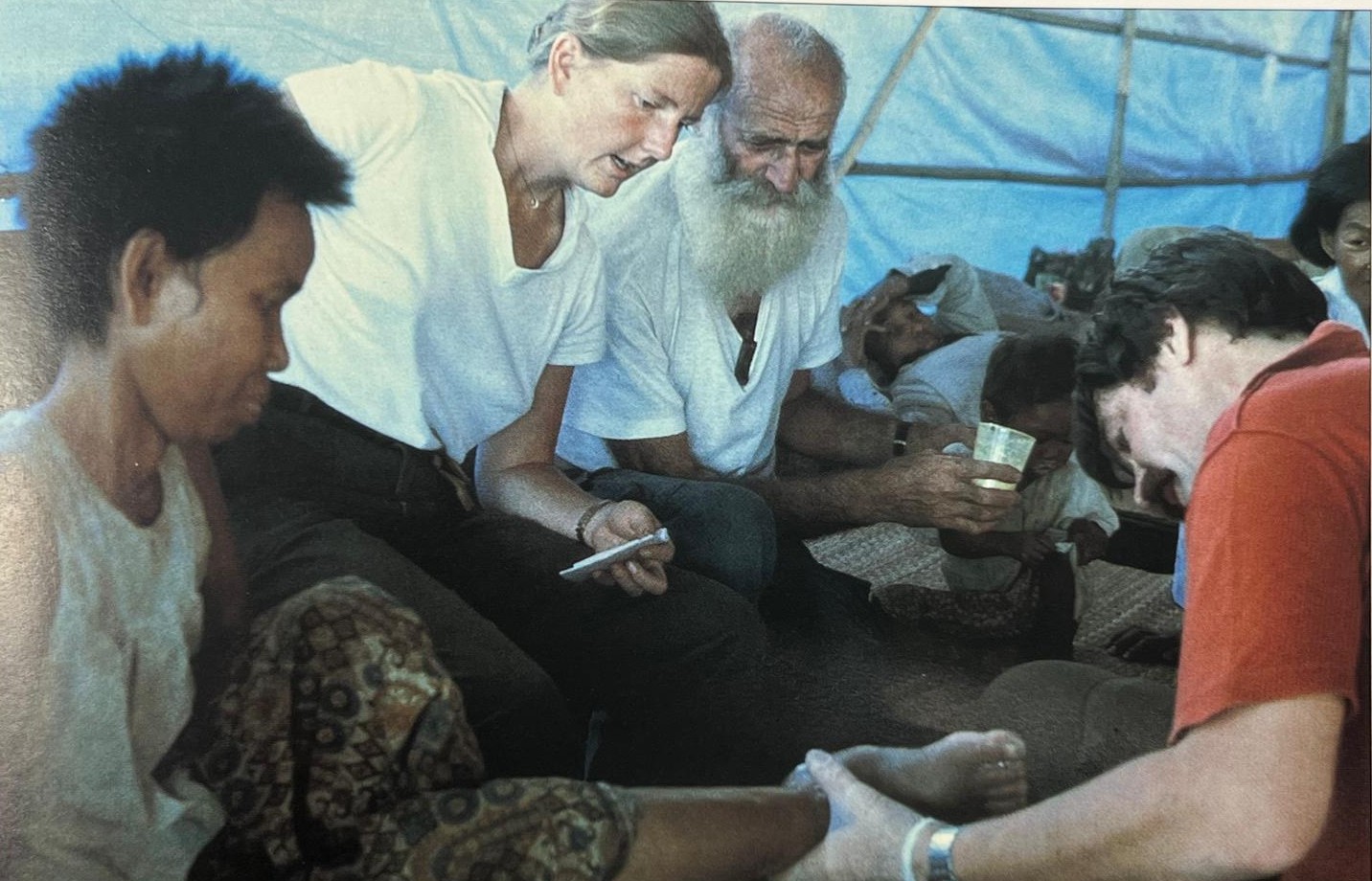
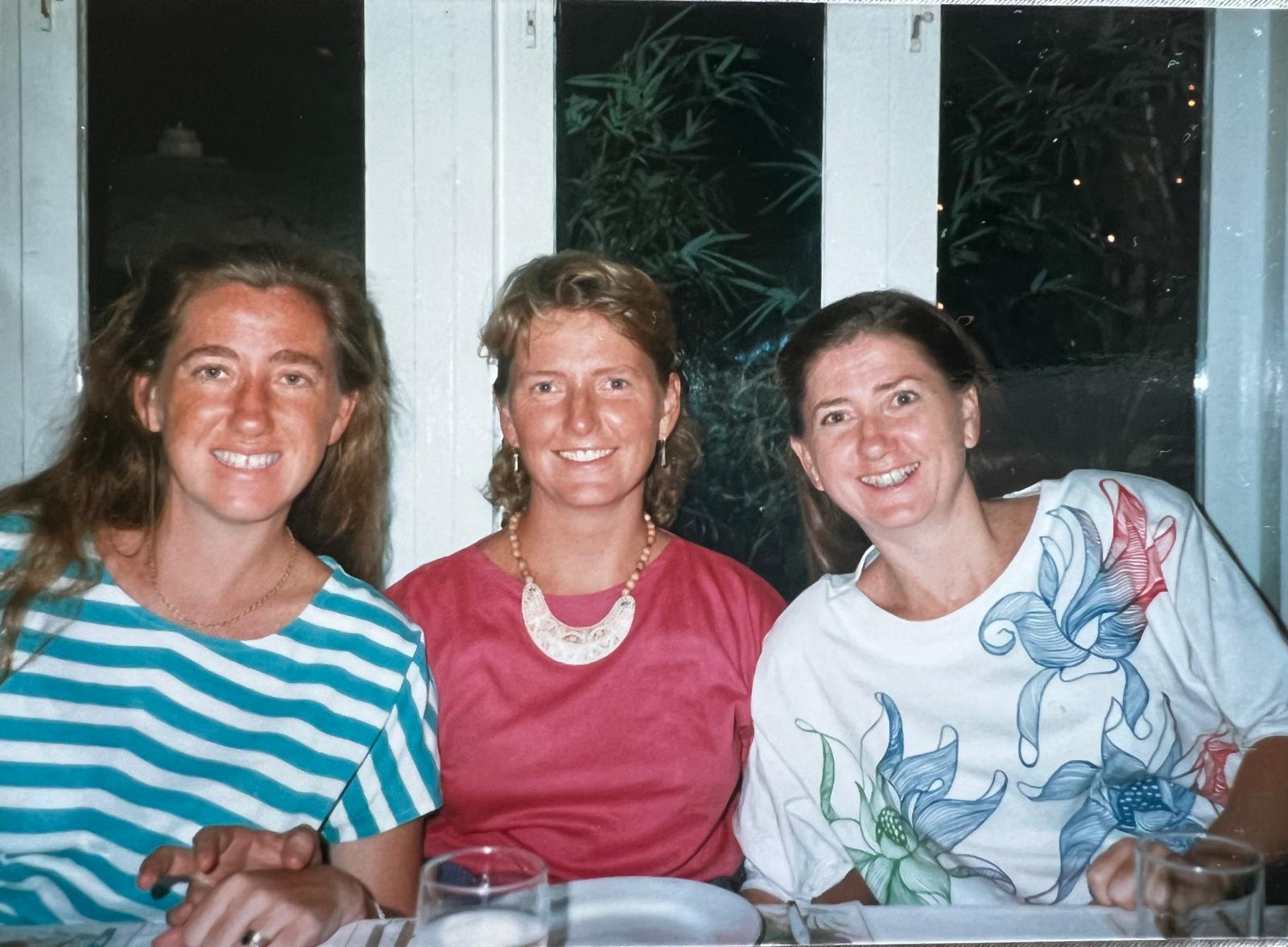
The Walker sisters when working together in Thailand. Left to Wright: Elizabeth, Patricia, Susan. Elizabeth was working for the Joint Voluntary Agency.

No items found.
No items found.

The beginnings of ARC

In October 1979, as images of the Cambodian “Killing Fields” filled headlines, Susan remembers seeing a cover of Time and feeling an unmistakable pull. “Our homeland needs our help,” she told her sister Patricia. The sisters had grown up in Taiwan and Thailand; their father Capt. Frederick Walker served as Chief Pilot for Air America.

What followed was swift and unexpected. After attending what they thought was a volunteer meeting organized by the budding American Refugee Committee in Minneapolis, Patricia asked the Dean at Mayo Medical School for permission to volunteer, and was sent to Thailand within weeks. Susan volunteered at the Minneapolis office, but soon a telegram from Thailand arrived: “1 million refugees at border, cannot handle it alone, send Susan Walker immediately.” Days later, at age 26, with limited experience but fluency in Thai and managerial skills, Susan found herself in Bangkok.

There was no one to receive her at the airport in Bangkok. No gradual on-boarding. No institutional infrastructure. ARC, founded by Neal Ball and Stan Breen, was improvising in real time.

The first volunteers were sent to the camps in Thailand on the Lao and  Cambodian borders, including Ban Vinai, Khao-I-Dang and Site 2. These were chaotic, volatile, and rapidly changing spaces. ARC’s response evolved just as quickly. As Susan put it, “The ARC was an organization set up by people with a clear set of values when it comes to humanitarian work, but the way it functioned evolved over time.” Professional systems came later. The belief that every person in a humanitarian disaster setting deserves help, came first.

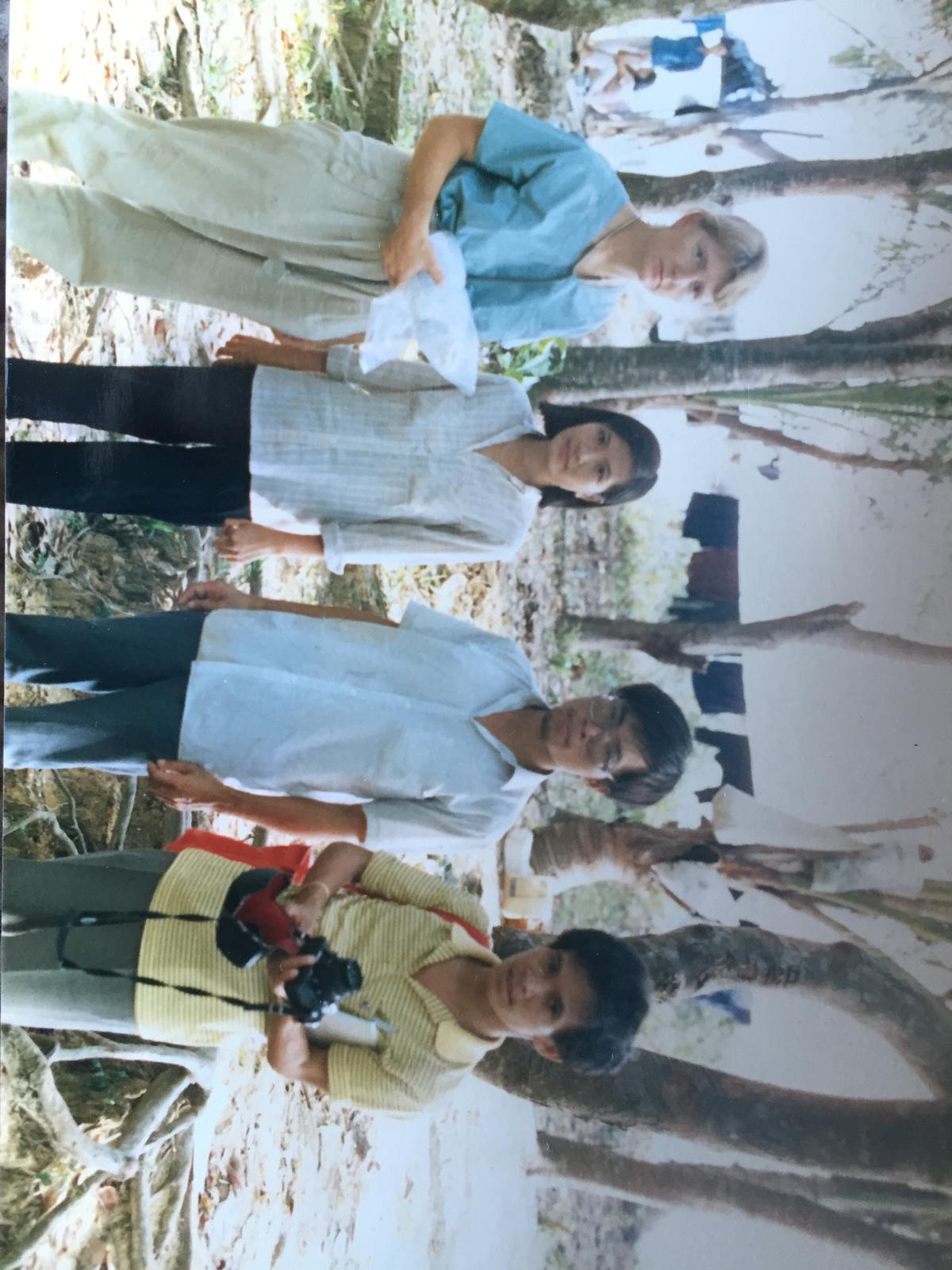
Susan B. Walker in front of the ARC hospital at Nong Samet on the Thai Cambodian border, circa 1980-1981.

The roots of Co-Creation

Today, co-creation is explicit in Alight’s language and strategy. In 1979, it was instinctive.

Patricia reflects: “The value of co-creation has been wonderfully explicit in the last few years, but in the beginning we implicitly behaved that way.” She recalls working at the 100-bedARC hospital at Khao-I-Dang, where Cambodian doctors, medics, and interpreters were central to the work.

One of just few surviving Cambodian physicians, Dr. Haing Ngor, volunteered in the ward. ARC very quickly started their medical training programme for local staff, and soon built teams of Khmer and Hmong medics working in the camps, placing trust and responsibility in refugee professionals themselves.

“That idea of co-creating and empowering communities to make decisions and implement them themselves, ”Patricia says, “came naturally, and was a key priority from the beginning.”

Susan echoes that instinct: “From the beginning we wanted to have as many Cambodian and Hmong staff as we could. ”ARC engaged camp leaders and administrators because “they knew the culture and they would know what would be best for their people.”

In one camp, rice rations were initially distributed to male heads of household. The result? Food was diverted to soldiers; and children went hungry. ARC shifted distribution to women. “That changed the nutritional status of children in the camp,” Patricia notes.

Co-creation extended beyond refugee communities. As Susan and her team drove through Thai villages each day, they noticed something troubling: camps often had better medical access than surrounding Thai communities. ARC responded by launching mobile medical and dental clinics for affected Thai villages, working with local hospitals, officials, and even the military.

“We were a humanitarian organization, we helped people in need,” Susan said simply.

It was an early, powerful recognition: humanitarian crises affect entire ecosystems. Real partnership must include host communities as well.

Dr. Patricia Walker, on left, responding to the Vietnamese refugee crisis on the islands off the coast of Thailand in 1987.

Page: /

What set ARC apart

ARC was one of over 50 organizations operating along the border. Yet its approach was distinct.

“I think nobody else did mobile medical unit,” Susan recalls. “I was one of the few directors who went to the field all the time.” Despite being the youngest director and the only woman, she was elected chair of the Committee for the Coordination of the Services for Displaced Persons in Thailand (CCSDPT), leading meetings with the UN, NGOs, embassies, and Thai authorities.

ARC combined flexibility with boldness. “ARC gave us a lot of freedom in our work,” Susan said. “We were free to assess what the needs were and what to do about it.”

That freedom led to innovation. In the early 1980s, many believed tuberculosis could not be treated in a warzone. ARC’s Dr. Steve Miles and colleagues disagreed. Against resistance, ARC won the right to implement a short-course TB treatment at the border.

The approach included directly observed therapy and a simple but radical tool: a patient contract. As Patricia explains, the contract affirmed that the patient was “a human being who knew that their disease could absolutely be treated and cured.” It trusted refugees as partners in their own care.

“It was never done in a war zone before,” she says. The short-course treatment model pioneered there is still referenced in medical circles today.

Patricia Walker, Dr. Solomon Cutcher, and paramedic John Lapakko examine a Cambodian woman with leprosy.

The power of women’s leadership

Susan and Patricia’s leadership was not framed as ground breaking at the time. But it was.

Susan, chairing high-level coordination meetings as the only woman among dozens of organizational heads, set standards for quality and accountability that earned deep respect. Decades later, when Thailand commemorated 25 years of humanitarian response, she was one of the few international invitees. She was also one of only five international staff who received an award for their humanitarian contributions to Thailand, from her majesty, Queen Sirikit..

ARC also invested in Traditional Birth Attendants, equipping midwives with kits as refugee camps closed and families returned to Cambodia – ensuring women could continue lifesaving work in their communities.

Long before research popularized the idea, ARC understood what Patricia describes so clearly: women are powerful stabilizers of families and decision-makers in health.

In the uncertainty of 1979, Susan and Patricia Walker did not have a blueprint. They had fluency in language and culture. They had courage. And they had a conviction that people closest to a crisis must shape the response.

Those early choices: living incamps, partnering with local staff, trusting patients, empowering women – still define Alight today.

Susan went on to work with Handicap International, and the International Campaign to Ban Landmines (ICBL), a co-recipient of the 1997 Nobel Peace Prize. Patricia went on to become a leading international expert in refugee and immigrant health care and tropical medicine, publishing the first textbook in Immigrant Medicine, and leading the Global Medicine Pathway at the University of Minnesota. Their early experiences with American Refugee Committee ignited a lifelong passion and commitment to work in the field of humanitarian assistance.

Susan B. Walker receiving HM Queen Sirikit Royal Medal for humanitarian services to Thailand, an award given to to very few foreigners.

Tags

No items found.

Stay in the loop
join our newsletter

Stay connected and learn how we respond to emergencies, amplify displaced voices, and provide sanctuary for those facing adversity.