Case Study

Safe Ride: a boda boda you can trust

In Uganda's refugee settlements, Alight is turning the boda boda into a source of income, trust, and opportunity.
No items found.

In Uganda's refugee settlements, the motorcycle taxi – the “boda boda” – is often the only way to reach a clinic, a market, or a school. But boda bodas have long suffered from bad reputation, and using it has been considered risky, especially for women and girls. Alight's Safe Ride initiative set out to change that perception, helping young refugees and host community members become trained, trusted riders – earning a steady living while looking out for their neighbors. Nearly a decade on, Safe Ride is a proven success across six settlements, with a small fleet of electric bikes recently joining the program.

“Safe Ride has been instrumental in improving my life. I obtained a motorcycle on credit from Alight, and I diligently made weekly payments until I fully repaid the loan. Now, I own my motorcycle outright.”

Ndayishimye Jackson

Challenge

Boda bodas fill a real need across Uganda's refugee settlements, yet the riders have often been viewed with suspicion rather than trust, often accused of involvement in criminal activities and violence against women and girls. Many also worked informally, borrowing motorcycles day to day from owners who could take them back without notice, leaving riders with little financial security and few ways to build something lasting.

Alight saw a chance to address both problems at once: reimagine the boda boda as a trustworthy mode of transport, and a business model providing sustainable livelihood in refugee settlement areas.

Page: /

Approach

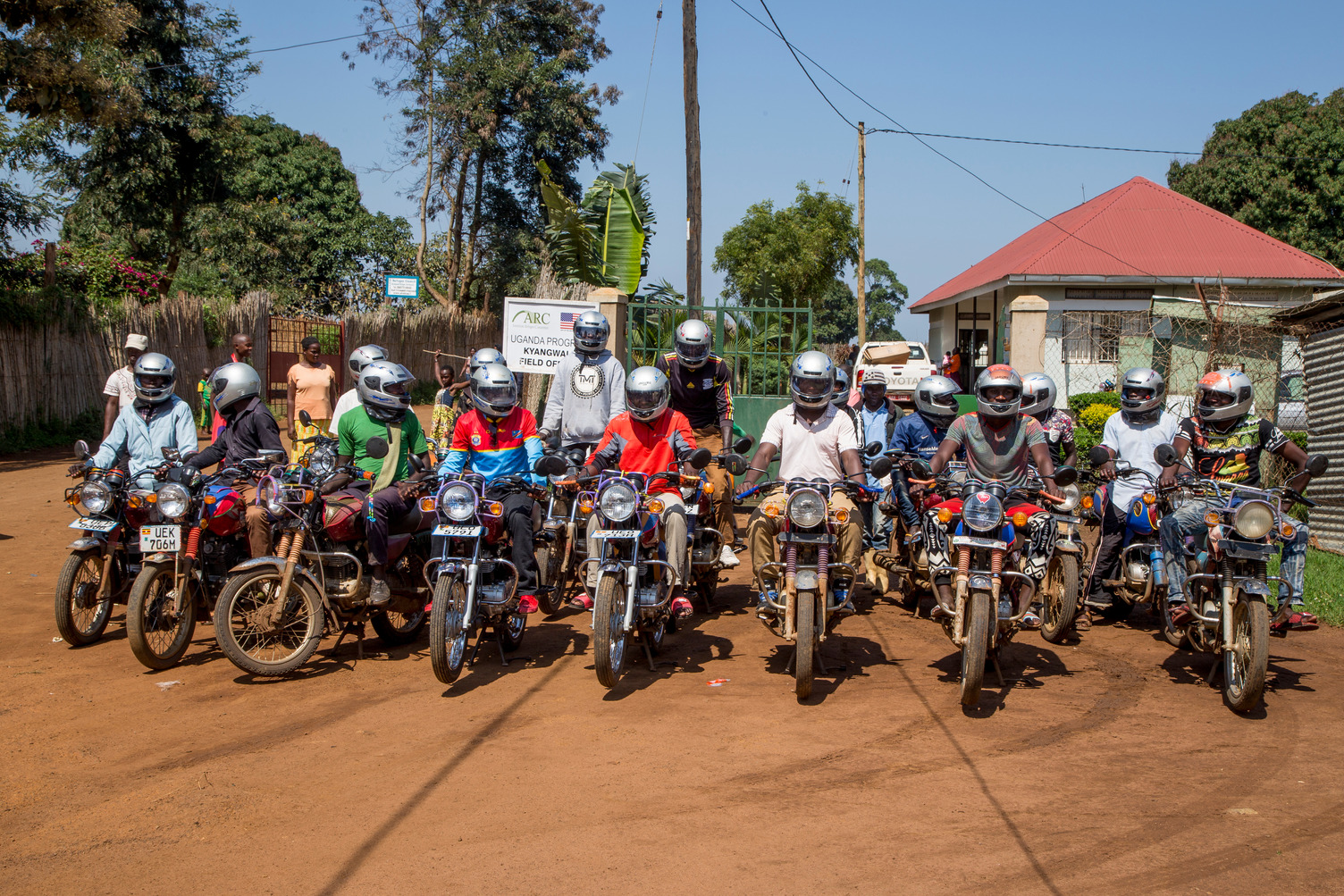
Safe Ride began with the generosity of private donors willing to take an early chance on the idea, and grew with support from the U.S. Bureau of Population, Refugees, and Migration. Alight launched the first program in Kyangwali Settlement in 2016–17. Motorcycles were offered to young people as a soft loan, that they would pay back through small weekly instalments over 18 months, after which full ownership would pass to the rider.

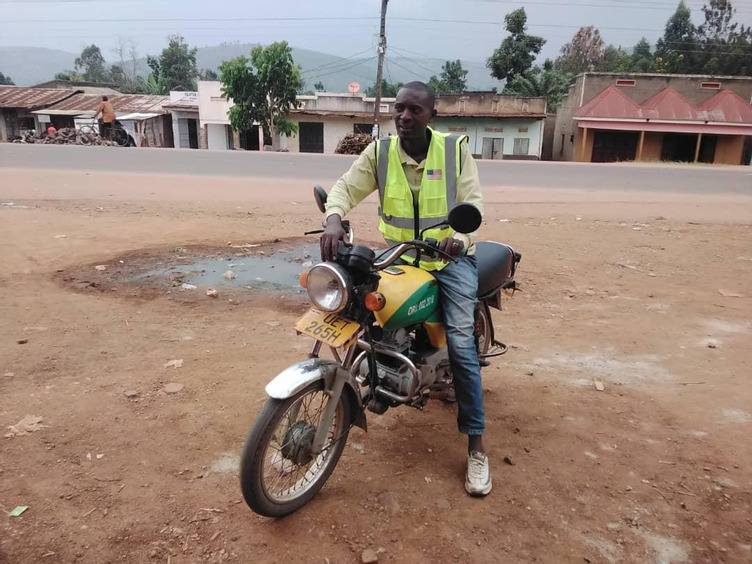
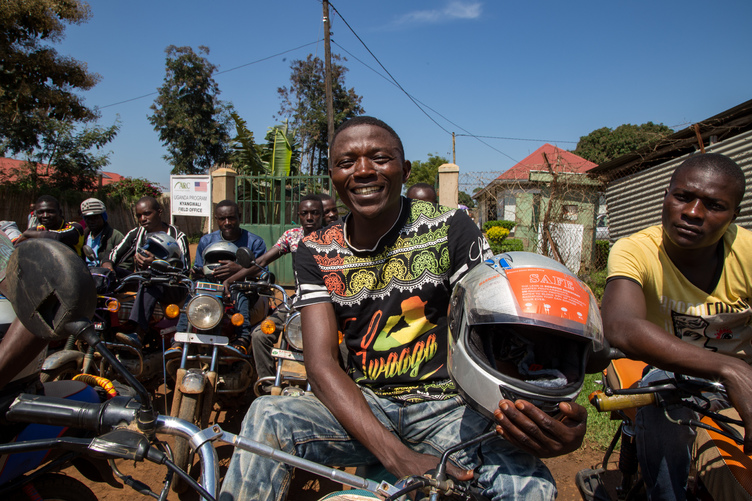
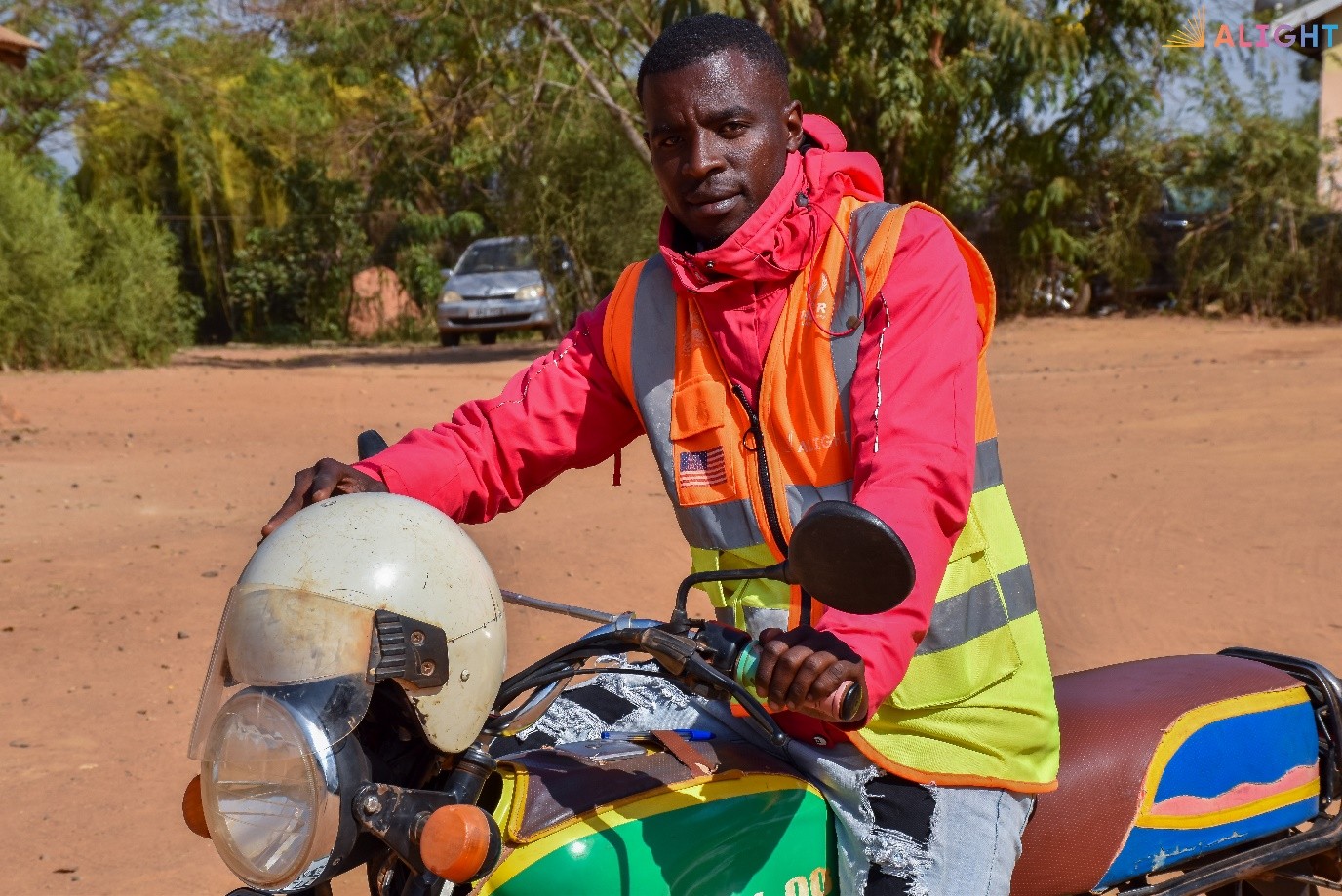
Every rider would also receive a comprehensive training in road safety and traffic law, communication, mediation and community leadership, and basic business management. They would also be informed on how to recognize and refer cases of gender-based violence and child protection concerns. Each trained rider became a “SafeRider,” recognizable by green-and-yellow branding, a helmet, and a reflector jacket.

As “SafeRiders” joined mainstream boda boda associations, the training they received spread naturally to riders beyond Safe Ride's own fleet, with road safety sessions delivered alongside Uganda Police traffic officers. Alight also automated loan repayment, giving riders a clear, transparent path toward owning their bike outright.

Noticing how few women had joined as riders, Alight also piloted a dedicated women's initiative in Nakivale settlement, supporting an initial group of 10 female riders with the same training, plus added attention to safety, self-defense, and mentorship from more experienced riders.

Impact

Safe Ride has grown from five motorcycles in 2017 to around 95 across all six of Uganda's major refugee settlements, with beneficiaries split roughly 70/30 between refugees and host communities. Fifteen riders have already completed repayment and taken full ownership of their bikes.

Riders who participated in the program tell us about the huge impact it's made in their families and households: school fees covered without worry, a plastic shelter replaced with iron sheets, a spouse's first business taking root, a home finally lit by solar power.

Ndayishimye Jackson, Burundian refugee from Nakivale refugee settlement, joined Safe Ride in 2016, after Alight responded to a request from young people in his community seeking support. Participation in the program was life changing for Ndayishimye: “Safe Ride has been instrumental in improving my life. I obtained a motorcycle on credit from Alight, and I diligently made weekly payments until I fully repaid the loan. Now, I own my motorcycle outright.”

With earnings from his boda-boda, Ndayishimye has been able to pay for his children’s schooling, and to buy his wife a tailoring machine, giving her an income of her own. Other riders describe similar turning points: a permanent home, a spouse's first business, or simply no longer fearing their source of income could be taken away without warning.

Just as meaningfully, riders describe a shift in how their communities see them – as trustworthy rather than suspicious. SafeRiders are now a recognized link to protection and health services, and program partners point to greater discipline among riders broadly and warmer cohesion between refugee and host communities who now train, ride, and earn side by side.

Opening the road for women

The women's pilot in Nakivale tells its own story. Starting from just 3 women among 85 riders, Alight brought 10 more into the program, supported by a network built to help women navigate a business long dominated by men. The results followed: women in the pilot earn an average of UGX230,000–300,000 a month, and most have gone on to start small businesses orjoin savings groups. Beyond the income, riders describe something harder to measure but just as real: a growing sense of confidence, and a few role models now showing the next woman that this work is possible for her too.

"If I hadn't received that motorcycle from Alight, noneof this would have been possible. It helped me move from one step toanother." – Marie Claire Zawadi, Safe Ride program participant.

What's next: testing electric bikes

Between April and July 2026, Alight will be exploring whether the next chapter of Safe Ride might run on electricity. A four-month pilot in Nakivale has put five electric motorbikes into the hands of 10 experienced SafeRiders, who are testing them on familiar routes – including trips to the border and to Mbarara city – while the team learns how riders and customers respond, and what charging and upkeep look like day to day.

Whatever the pilot finds, the aim stays the same as it'salways been: safe, reliable transport, delivered by riders the communitytrusts, creating sustainable and meaningful work.

Tags

No items found.

Stay in the loop
join our newsletter

Stay connected and learn how we respond to emergencies, amplify displaced voices, and provide sanctuary for those facing adversity.